
Call us now :08045803488
 Send Inquiry
 Send Inquiry
Hydraulic Seat Valves
MOQ : 1 Piece
Hydraulic Seat Valves Specification
- Usage
- Industrial
- Product Type
- Hydraulic Seat Valves
Hydraulic Seat Valves Trade Information
- Minimum Order Quantity
- 1 Piece
- Payment Terms
- Cash Against Delivery (CAD), Cash on Delivery (COD), Letter of Credit (L/C), Telegraphic Transfer (T/T), Western Union, Paypal, Delivery Point (DP), Days after Acceptance (DA), Cash in Advance (CID), Cheque, Cash Advance (CA)
- Supply Ability
- 100 Pieces Per Day
- Delivery Time
- 7-30 Days
- Sample Available
- Yes
- Sample Policy
- Sample costs shipping and taxes has to be paid by the buyer
- Main Domestic Market
- All India
Hydraulic Seat Valves About
Hydraulic Seat Valves
Able to deal with extremely high pumping pressures, the provided Hydraulic Seat Valves are offered in various specifications as per the demanding requirements of the clients. Our offered valves are manufactured with the use of optimum quality raw materials and the progressive techniques. We check these valves on different parameters to ensure their robust construction and high durability. In addition, we provide these Hydraulic Seat Valves at highly competitive prices to the clients.
Key Features:
- Superior surface finish
- Abrasion resistance
- Robust construction
- Excellent durability
Specifications:
| Model No. | Nominal Size | Max. Flow | Max. Pressure | Mounting options | |||
| Inch | mm | gpm | lpm | psi | bar |
| |
| VD4S03 | 3/8" | 10 | 47 | 180 | 5000 | 350 | Subplate / Threaded |
| VD4S06 | 1" | 25 | 95 | 360 | 5000 | 350 | Subplate / Threaded |
| VD4S10 | 1 1/2 | 38 | 158 | 600 | 5000 | 350 | Subplate / Threaded |
| VCAR4 | 1/2" | 12 | 47 | 180 | 5000 | 350 | Manifold Mounted |
| VCAR2 | 1 1/2 | 38 | 158 | 600 | 5000 | 350 | Manifold Mounted |
TECHNICAL SPECIFICATIONS
| SERIES | | VD4S03 | VD4S06 | VD4S10 | VCAR4 | VCAR2 |
| Maximum pressure | | | | | | |
| | psi | 5000 | 5000 | 5000 | 5000 | 5000 |
| | Bar | 350 | 350 | 350 | 350 | 350 |
| Maximum Displacement | | | | | | |
| | In/rev | 3/8 | 1 | 1 1/2 | 1/2 | 1 1/2 |
| | Cm/rev | 10 | 25 | 38 | 12 | 38 |
| Maximum Speed | rpm | 180 | 360 | 6000 | 180 | 600 |
Precision for Industrial Systems
The hydraulic seat valves we provide ensure accurate regulation of water in medium-pressure hydraulic circuits. Built from tough cast iron, these valves stand up to continuous industrial use, promoting longevity and minimal maintenance. Their compatibility with standard temperature conditions makes them an essential component in many industrial set-ups.
Reliable Hydraulic Operation
Powered by hydraulic systems, these seat valves offer fast and dependable actuation. Their design optimizes water media control for a variety of machinery and processing environments, improving operational efficiency and reducing costs linked to manual control or frequent replacements.
FAQ's of Hydraulic Seat Valves:
Q: How are hydraulic seat valves operated in industrial settings?
A: Hydraulic seat valves function by utilizing hydraulic pressure to control the valve seat, enabling precise modulation of water flow within medium-pressure industrial systems. This actuation method ensures consistent and dependable performance.Q: What industries commonly use hydraulic seat valves made of cast iron?
A: These valves are widely employed in sectors such as water treatment, power generation, manufacturing, and chemical processing, where robust water flow control at medium pressure is essential.Q: When should you consider using a hydraulic seat valve over manual or electric types?
A: A hydraulic seat valve is ideal when frequent, reliable actuation at medium pressure is necessary and when remote or automatic control is preferred to reduce manual intervention and enhance system efficiency.Q: Where are your hydraulic seat valves available for purchase or distribution?
A: As a distributor, exporter, importer, and trader based in India, we offer these valves across domestic and international markets. Orders can be placed directly through our sales team for prompt delivery.Q: What is the process for installing a hydraulic seat valve in an industrial water system?
A: Installation involves integrating the valve into the hydraulic line, ensuring compatible fittings and alignment. It is essential to follow manufacturer guidelines for pressure ratings and mounting to guarantee optimal performance.Q: How does the use of cast iron benefit hydraulic seat valves?
A: Cast iron construction provides exceptional durability and resistance to wear, making these valves suitable for harsh industrial environments while maintaining a reliable seal over prolonged use.Q: What are the main benefits of using your hydraulic seat valves for water media?
A: The primary advantages include robust flow control, low maintenance requirements, long operational lifespan, and consistent performance, even under continuous medium-pressure conditions typical in industrial settings.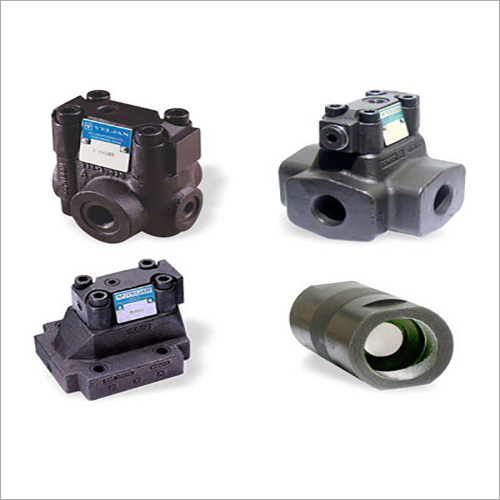
Tell us about your requirement

Price:
Quantity
Select Unit
- 50
- 100
- 200
- 250
- 500
- 1000+
Additional detail
Mobile number
Email

More Products in Veljan Hydraulic Seat Valve Category
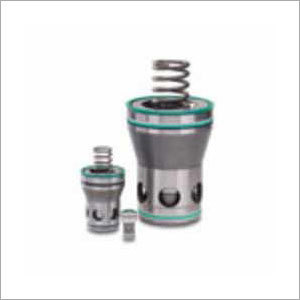
Logic Seat Valves
Minimum Order Quantity : 1 Piece
Material : Stainless Steel
Media : Oil
Pressure : Medium Pressure
Usage : Industrial
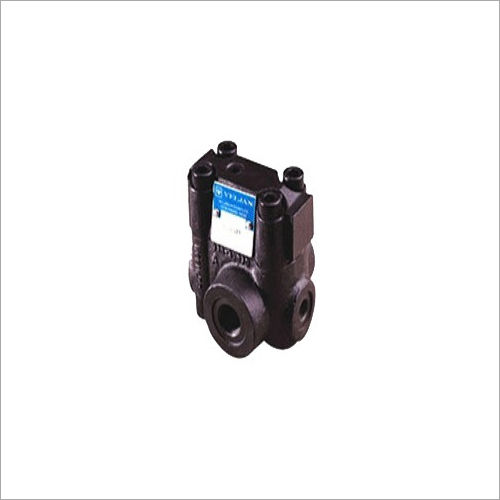
Seat Valve
Minimum Order Quantity : 1 Piece
Material : Casting
Media : Water
Pressure : High Pressure
Usage : Industrial

 Send Inquiry
Our Products
- Vane Pumps
- Piston Pumps
- Veljan Vane Motors
- Veljan Hydraulic Seat Valve
- Veljan Direction Control Valves
- Hydraulic Gear Pumps & Motors
- Veljan Check Valves
- Veljan Flow Control Valves
- Veljan Pressure Control Valves
- High Pressure Gear Motor
- Roller Bearing Gear Motor
- Gear Flow Divider
- High Pressure Gear Pump
- Roller Bearing Gear Pump
- Vane Pump Cartridge Kits
- Diverter Valves
- Pressure Control Valves
- Flow Control Valves
- Hydraulic Motors Accessories
- Hydraulic Pumps
- Hydraulic Seat Valves
- Mobile Sectional Valves
- Hydraulic Check Valves
- Hydraulic Flow and Proportional Control Valves


MZ-3, Bansi Trade Centre, 581/5, M. G. Road, Indore - 452001, Madhya Pradesh, India

Mr Pankaj Goyal
(Proprietor)
Mobile :08045803488
 Send Inquiry
 Send SMS
Developed and Managed by Infocom Network Private Limited.


